
A Second Season of Discovery at Alta
The Utah State Historic Preservation Office (SHPO) and the Uinta-Wasatch-Cache National Forest returned to the mountains this summer for a second year of archaeological excavation at Alta.
Last year, this exciting piece of Utah history came to light when a water infrastructure project unexpectedly collided with the remnants of a late-19th-century silver mining boomtown. The construction project exposed a massive collection of artifacts, prompting SHPO to rush to the scene. Working quickly behind heavy machinery, teams salvaged the objects to ensure this vital history would not be lost forever.
The findings from the 2025 excavation generated immense popularity and sparked headlines worldwide. Locally, Utahns were captivated by the history resting right under the slopes of the beloved ski resort. Globally, the interest was equally strong as historians explored how these artifacts add rich depth to our understanding of the American West, global trade networks, modern ski culture, and mountain communities.
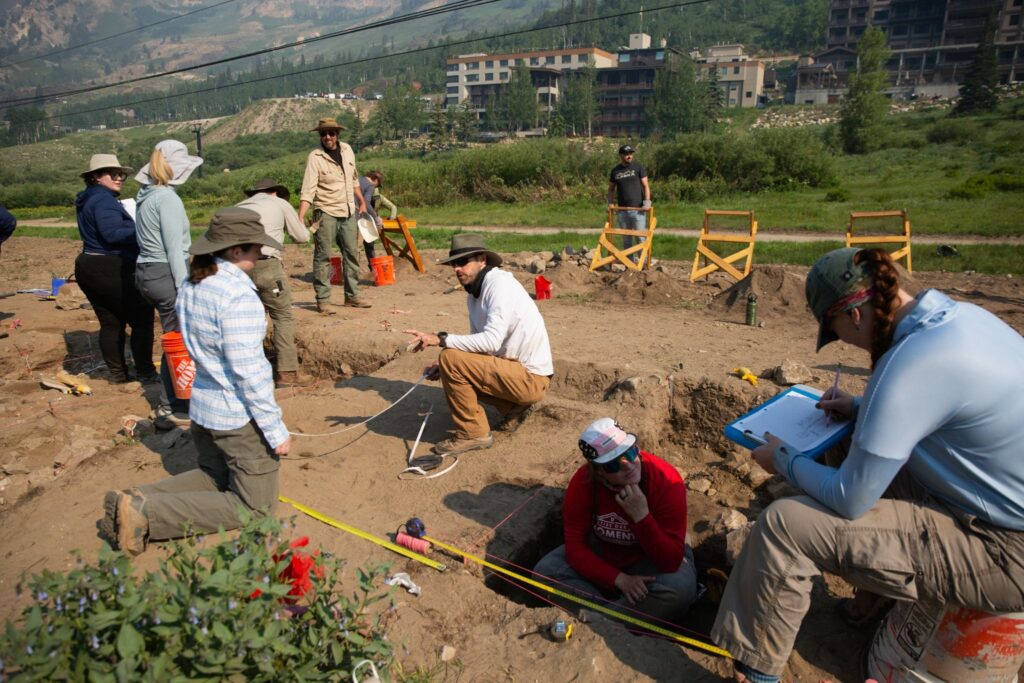
Building on last year’s discoveries, SHPO returned to the mountain this summer, partnering with the U.S. Forest Service, university field school students, and professional archaeologists. This season, the mission transformed from an emergency rescue operation into the first controlled, methodical scientific excavation of Utah’s most celebrated mining boomtown.
“Our team was so excited to do the work this year,” said Chris Merritt, Utah State Historic Preservation Officer. “Unlike working behind a backhoe where finding objects in place was not possible, this year was a real archaeological excavation with horizontal and vertical controls on every shovel of dirt and every artifact recovered. Even the smallest pattern of artifacts can tell us a lot about the function of the buildings along Water Street, such as restaurants or butcher shops, and we now have the control to find that out!”


Extracting Historical Narratives through Material Remains
These precise scientific controls are vital because the history of Alta’s Water Street has no written documentation. Although the street was once the bustling commercial hub of the town, early chroniclers left no record of it. In the absence of written texts, researchers rely on archaeology, the study of human material remains, to reconstruct the truth of daily life on the mountain.
Popular lore often paints silver mining boomtowns as violent, rough-and-tumble outposts that were here one minute and gone the next. However, the physical evidence pulled from the dirt tells a far more nuanced story. The artifacts prove that Alta was not a lawless camp, but a permanent, deeply rooted community complete with restaurants, businesses, and even an opera house.
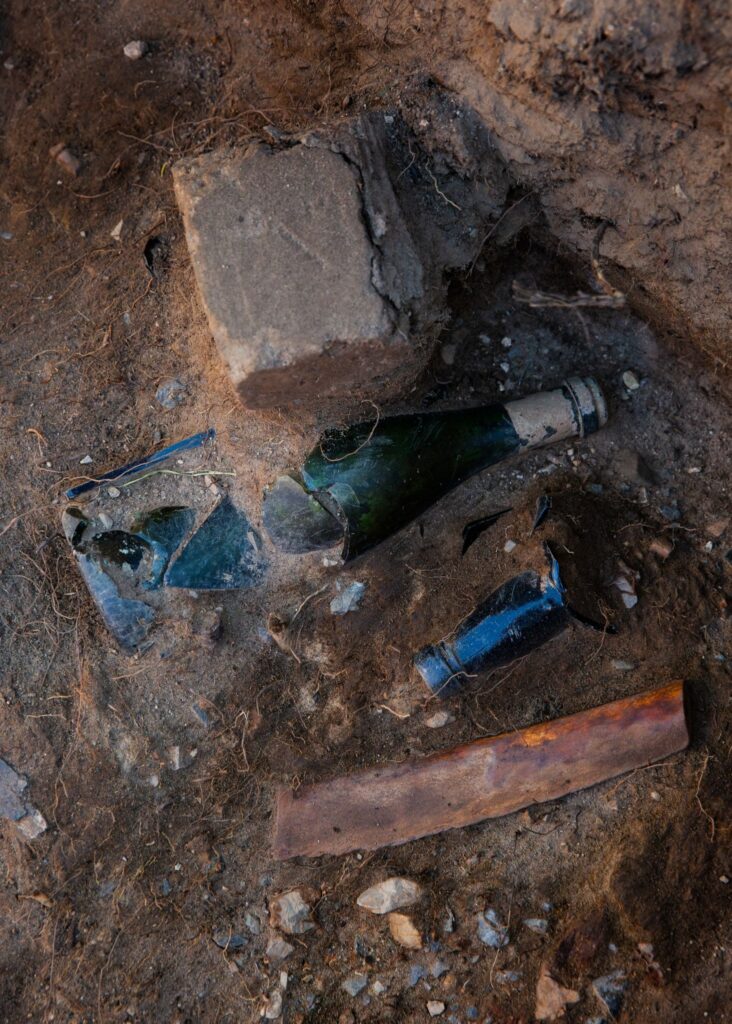
The controlled excavation allows for the recovery of fragile pieces of history that mainstream books often omit. This season yielded evidence of the women, children, and Asian immigrants whose labor and lives built the canyon community.
Among the most exciting finds were highly personal objects. “My favorite artifacts are actually a hard rubber women’s barrette and what was left of a women’s coin purse or clutch,” Dr. Merritt shared. “These artifacts shed a personal light on those women who formed a life in Alta, whether they owned their businesses, which they did, worked in various businesses, or were parts of families. They tell us a story skipped by most history books.”


The Lab Work Begins
While wrapping up the fieldwork marks a major milestone for the summer, the heavy lifting is actually just getting underway. For every single day the team spent digging in the dirt, researchers will spend at least four to five days in the laboratory carefully cleaning, sorting, and cataloging every fragment recovered.
Once that cataloging is complete, the team will begin analyzing the spatial patterns to reconstruct individual structures along Water Street. From there, the data will be transformed into comprehensive reports, public presentations, and eventually, public museum exhibits.
There is still plenty of work to be done, but analyzing these pieces of the past remains the most rewarding part of the process. Stay tuned to the SHPO blog for more updates as the laboratory work unfolds.


Legal Disclaimer:
EIN Presswire provides this news content "as is" without warranty of any kind. We do not accept any responsibility or liability for the accuracy, content, images, videos, licenses, completeness, legality, or reliability of the information contained in this article. If you have any complaints or copyright issues related to this article, kindly contact the author above.
